

Smart Thermostat Savings Calculator: Estimating Seasonal HVAC ROI

A smart thermostat savings calculator estimates your seasonal utility savings, but reaching those targets takes twice-yearly calibration. Most households set up the thermostat once and leave its settings alone.
The upkeep task homeowners skip most is comparing remote room sensors with a verified thermometer. Incorrect temperature corrections can cost hundreds of dollars annually through short-cycling, or frequent starts and stops, and unnecessary runtime while you're away.
Small temperature errors add up when your property sits empty for days. An inaccurate thermostat can overheat an empty house in summer or keep heating coils running in winter. Scheduled sensor checks and physical maintenance help protect the compressor and prevent frozen pipes. They also keep your climate controls working with the rest of your home automation.
What's Inside This Guide
- Preventing Sensor Drift, Ghost Runs, and Equipment Stress
- The Seasonal Maintenance Ledger: Intervals and Ownership Tasks
- Hands-On Routine: Safe Calibration Steps for Ashburn Homeowners
- Where Low-Voltage Wiring Demands Professional Precision
- Quarterly Adjustments for Northern Virginia Weather Shifts
- The Compounding Expenses of Neglected Setpoints and System Wear
- Practical Questions on Climate Controls and Security Automation
- Calibrate and Protect Your Ashburn Property with NovaProHome
Preventing Sensor Drift, Ghost Runs, and Equipment Stress
Thermostats use tiny thermistors, sensors that measure temperature, whose performance suffers under household dust, pet hair, or airborne grease. Over a season, this buildup can insulate the sensor. A wall controller might read 70 degrees while the hallway is already 74, leaving the air conditioner running continuously.
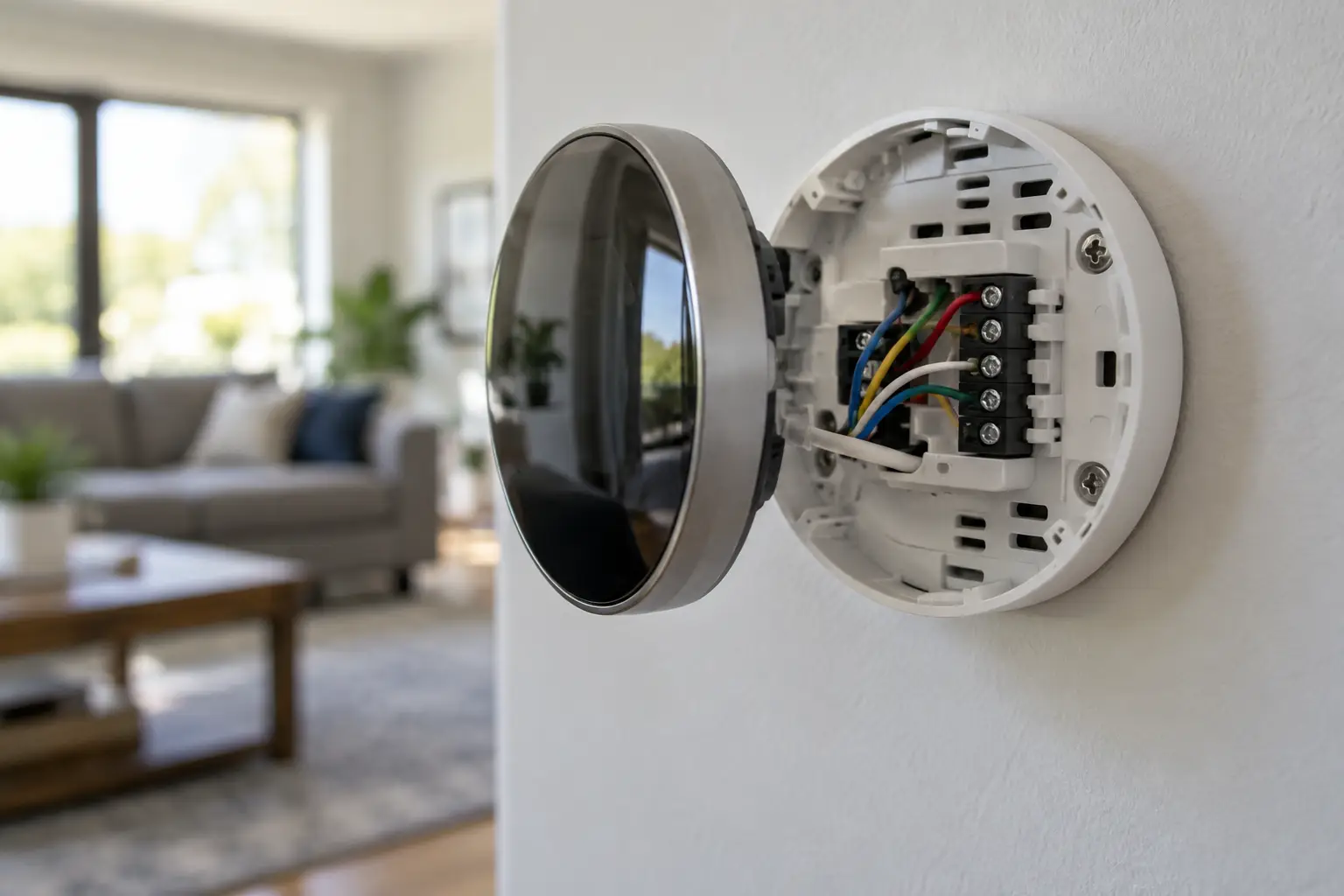
In winter, inaccurate readings can threaten more than your electric bill. A four- or five-degree error while you're traveling may delay heat long enough for pipes in unheated exterior walls to burst. Routine checks also confirm that vacation temperature settings take effect when your security system enters away mode.
Safety check: Never vacuum thermostat vents or wipe them with liquid cleaner while the circuit breaker is on. Static electricity or moisture can damage the terminal relays.
According to ENERGY STAR guidelines, verified smart thermostats save an average of 8 percent on annual heating and cooling bills. Those savings depend on accurate scheduled temperature adjustments. Our savings calculator lets you estimate the return for your equipment and compare seasons.
The Seasonal Maintenance Ledger: Intervals and Ownership Tasks
Climate controls and connected security devices don't need daily attention. A regular maintenance schedule keeps them working together and helps you avoid unnecessary service calls.
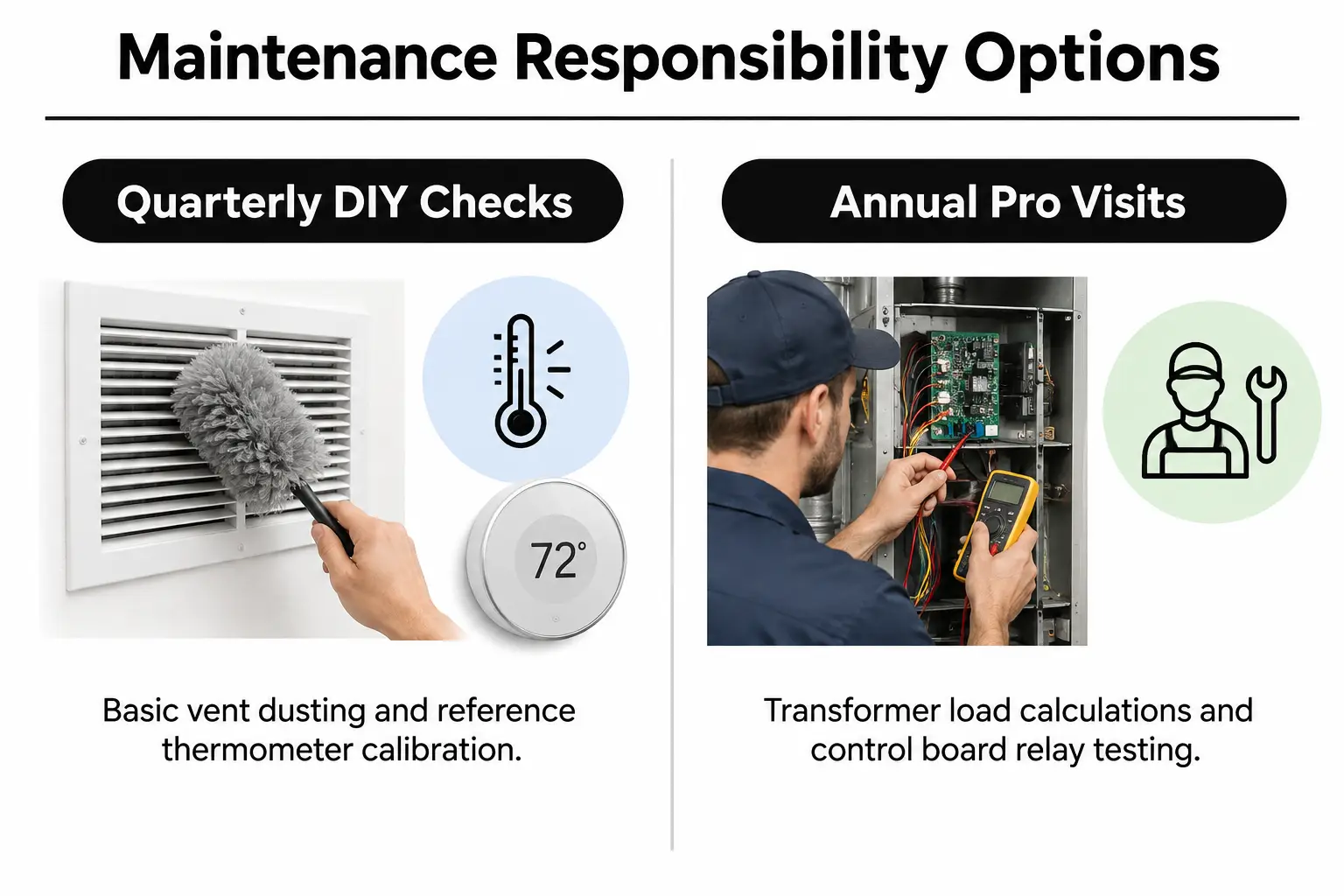
| Task | Frequency | DIY or Pro | Why It Matters |
|---|---|---|---|
| Clean dust and intake vents | Quarterly | DIY | Keeps buildup from insulating sensors and distorting room readings. |
| Replace remote room sensor batteries | Annual | DIY | Prevents lost connections that cause erratic heating and cooling cycles. |
| Check C-wire voltage and terminals | Every 2 Years | Hire a Pro | Stops power-sharing pulses that wear out air handler boards. |
| Test vacation automation rules | Semi-Annual | DIY | Confirms that arming security activates energy-saving temperature settings. |
| Verify HVAC board relays | Annual | Hire a Pro | Ensures multi-stage compressors switch stages correctly. |
Hardware checks are also a chance to test routines that connect entry doors and motion sensors with your climate settings. Homeowners following our smart home security maintenance checklist often find that neglected low-voltage accessories cause communication failures between systems.
Hands-On Routine: Safe Calibration Steps for Ashburn Homeowners
Keeping sensors accurate doesn't require an electrical engineering background. Basic calibration uses simple tools and takes less than fifteen minutes per controller.
Video: Calibrating a SensorPush wireless humidity & temperature sensor (SensorPush)
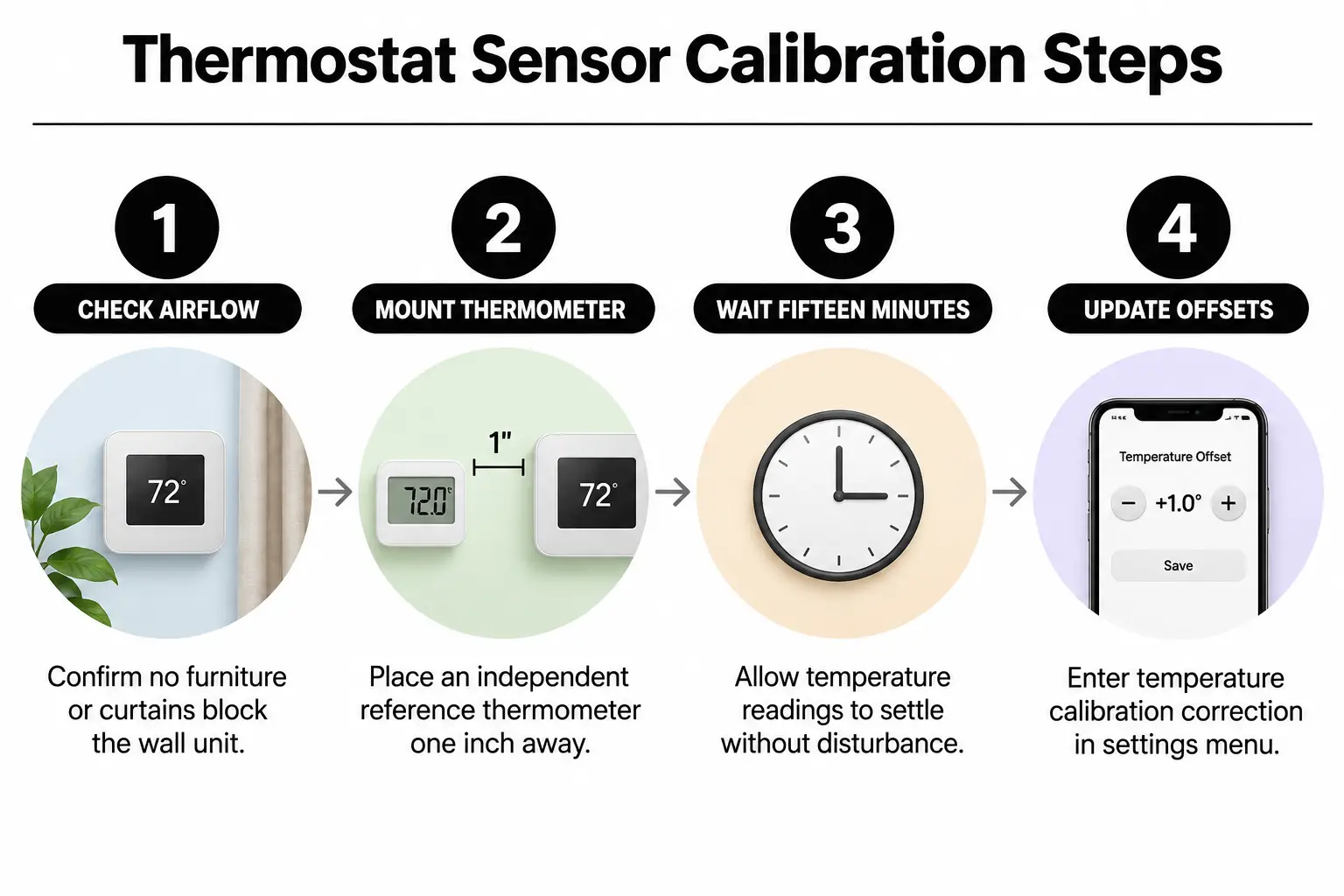
- Check airflow around the base: Make sure interior doors or heavy curtains aren't blocking air around the wall unit. Check any furniture you've recently added, too.
- Tape a thermometer beside the wall unit: Position an accurate digital or alcohol thermometer one inch from the unit. Keep it from touching the wall itself.
- Allow fifteen minutes for the reading to settle: Let the reference thermometer reach room temperature. Avoid breathing directly on its sensor bulb while you wait.
- Compare readings and correct the offset: For a difference greater than one degree, open the controller menu. Adjust its temperature offset, the setting that corrects the displayed reading.
- Test the emergency setback: Switch your mobile app to away mode. Verify that the compressor and fan shut down within two minutes.
Watch your mobile device throughout these tests. Delayed responses or connection timeouts may point to radio interference on your local 2.4 GHz network. Our guide to troubleshooting a smart device that's gone offline explains how to clear those bottlenecks.
Where Low-Voltage Wiring Demands Professional Precision
Software calibration is straightforward, but work on line-voltage wiring or multi-stage relays can damage equipment. Older four-wire bundles lack a dedicated C-wire, which supplies constant power. Without it, the thermostat draws power from the furnace control board through a method called power stealing. That fluctuating load wears down solid-state relays over time.
Licensed technicians use diagnostic meters to measure current draw at peak load. During a full service visit, an installer checks:
- Steady transformer output: Verify a steady 24-volt AC supply without unexpected drops while the heat pump runs its defrost cycle.
- Reversing valve operation: Check that dual-fuel changeover settings activate the backup electric heating strips at the correct point.
- Security connections: Link smart locks and alarms so the HVAC switches to safe temperature limits whenever you secure the house for travel.
Stop immediately if you find stripped screw terminals or hear buzzing behind the drywall. Mismatched wire colors inside the air handler also need attention. Ask your local building department about low-voltage electrical permits, or contact our team for diagnostic service.
Quarterly Adjustments for Northern Virginia Weather Shifts
Ashburn's weather ranges from humid, 90-degree summer days to winter windstorms below freezing. Your smart thermostat savings calculator estimates need to account for those changes. Adjust runtime limits before extreme weather arrives, rather than waiting for the next utility bill.
Spring Transition
- Clear dust from the casing vents with dry, compressed air.
- Review automatic fan runtimes to reduce the damp, unconditioned outdoor air pulled into the ducts.
- Read our advice on updating your Ashburn home's thermostat schedule before spring humidity arrives.
Summer Peak
- Limit away temperatures to four degrees above normal so the system doesn't need long recovery runs.
- Keep the outdoor condensing unit's disconnect switches clean and clear of vegetation.
- Verify that security geofencing, which uses location to detect departures, activates daytime energy-saving settings when family members commute.
Autumn Preparation
- Replace the primary coin-cell batteries in every paired wireless room temperature sensor.
- Test furnace ignition while the weather is still mild.
- Compare expected electrical use across your controllers with our guide to monthly smart home power use.
Winter Shielding
- Set the emergency minimum temperature to 55 degrees to protect plumbing in exterior crawl spaces.
- Check auxiliary heat lockouts, settings that stop backup electric heating strips from running unnecessarily.
- Inspect plug enclosures for winter security lighting with our weatherproof outdoor smart plug checklist.
The Compounding Expenses of Neglected Setpoints and System Wear
Missed maintenance costs more than the extra electricity on your monthly bill. Poorly calibrated sensors can make the air handler short-cycle, starting and stopping six to ten times per hour. Instead of distributing air steadily, the equipment repeatedly switches on and off.
U.S. Department of Energy guidance puts annual heating and cooling savings from proper setback temperatures at up to 10 percent. Neglecting basic maintenance wipes out those savings. Wear on fan contactors and compressor capacitors can also cause those parts to fail early, often in midsummer.
Insurance claims can become harder to resolve, too. Pipes that burst during an unattended freeze or water damage from iced-over evaporator coils can complicate a claim. Our article on professional installation and home insurance rates explains how documented environmental monitoring helps protect your home from avoidable loss.
Practical Questions on Climate Controls and Security Automation
How often should I use a smart thermostat savings calculator?
Run the numbers twice a year, before summer and winter utility rates take effect. Include increases in your local utility's pricing tiers. Updated rates help you check that scheduled away temperatures still deliver the seasonal savings you expect.
Why does my smart home system installation require professional circuit testing?
Modern climate controllers need constant power from the furnace control board. A technician checks the added load from automated zone dampers, cameras, and hubs. This confirms that your equipment's transformer can handle the load without a drop in voltage.
Can home security system installation connect directly to my climate controls?
Yes, connected security systems can link armed-away status directly to your climate controls. Arming perimeter cameras and deadbolts automatically puts the HVAC in vacation mode. That reduces wasted energy while keeping indoor humidity within safe limits.
Where can I find reliable smart security installation in Ashburn?
Schedule certified system design through us at NovaProHome. Our local low-voltage specialists make sure your doorbells and smart locks communicate with your climate controls over a separate, reliable network.
What should I compare when researching smart home setup near me?
Ask if the installer connects the whole system or just mounts individual devices on the wall. Our comparison of local installers and retail DIY options covers insurance and system warranties. It also explains what to check for compliance with local wiring codes.
Calibrate and Protect Your Ashburn Property with NovaProHome
At NovaProHome, we bring over ten years of operations leadership and hands-on electrical engineering experience to each property visit. We carry insurance coverage and design connected home systems. That includes dedicated climate controls and smart locks, along with exterior cameras and whole-home automation.
Multi-property controls and settings that protect your home while you travel are both part of our work. We handle the configuration under a fixed written quote, including thermostat design. To arrange a full on-site assessment, contact our Ashburn team.
Ready to engineer your smart home?
Start with a free 20-minute discovery call. No pressure, no sales script — just a plan.