

The Best Camera Settings for Rainy or Foggy Virginia Weather
For rainy or foggy Leesburg weather, adjust motion boundaries and night vision on Google Nest Systems, then wipe mineral residue off the camera dome. As autumn moisture moves from the Potomac into Piedmont valleys, sensitivity settings need seasonal checks. Residue is easy to miss, but it reflects nearby infrared light and can completely blind motion sensors.
Review your motion boundaries and night vision settings twice a year. These changes keep the perimeter clear without filling your phone with false alerts from damp mist.
Water droplets bend light back toward high-powered infrared sensors. Switching to ambient low-light recording, or moving detection zones away from reflective gutters, keeps video clear during dense Leesburg morning cloud cover.
What's Inside This Guide
- Why Wet Weather Blinds Unadjusted Lenses
- Routine Sensor and Lens Maintenance Timetable
- Hands-On Adjustments You Can Handle Right Now
- What Happens During a Professional Electrical Hardware Inspection
- Managing Virginia Climate Shifts Quarter by Quarter
- The True Cost of Neglecting Moisture Management
- Common Questions on Wet Climate Security Cameras
- Book Your Next Diagnostic Visit in Town
Why Wet Weather Blinds Unadjusted Lenses
Mist and driving rain affect more than the outer glass. Moisture scatters light, turning infrared beams into white glare that fools software looking for changes between pixels. Without adjustments, the camera treats suspended droplets as constant movement. That drains backup batteries and fills the event history with false alerts, burying real security warnings.
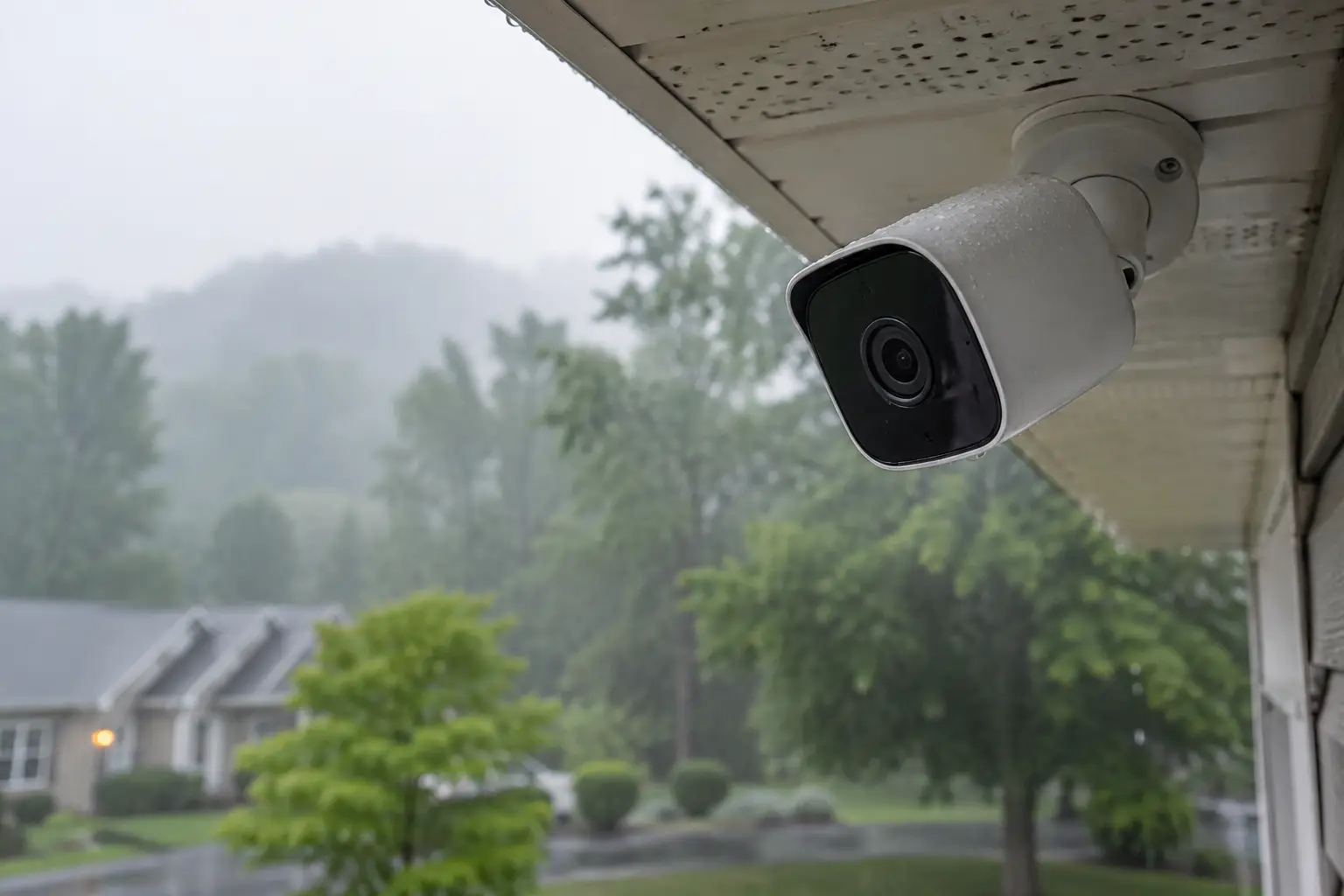
Exterior mounting hardware suffers too. Above eighty percent humidity, unsealed junction boxes collect condensation that corrodes copper contacts, slowing video frame rates or cutting feeds entirely. App mistakes can make these hardware problems harder to spot. Our guide to common notification setup mistakes explains what to check.
Lens angle rule: Tilt cameras downward at least fifteen degrees beneath soffits, the underside of roof overhangs. Wind-driven drizzle can then roll off the lower rim instead of pooling over the glass.
Mounting height matters as well. A camera placed flush against an overhang often traps rising porch steam against its housing. That can leave permanent fog between the lens elements, where no app setting can fix it.
Routine Sensor and Lens Maintenance Timetable
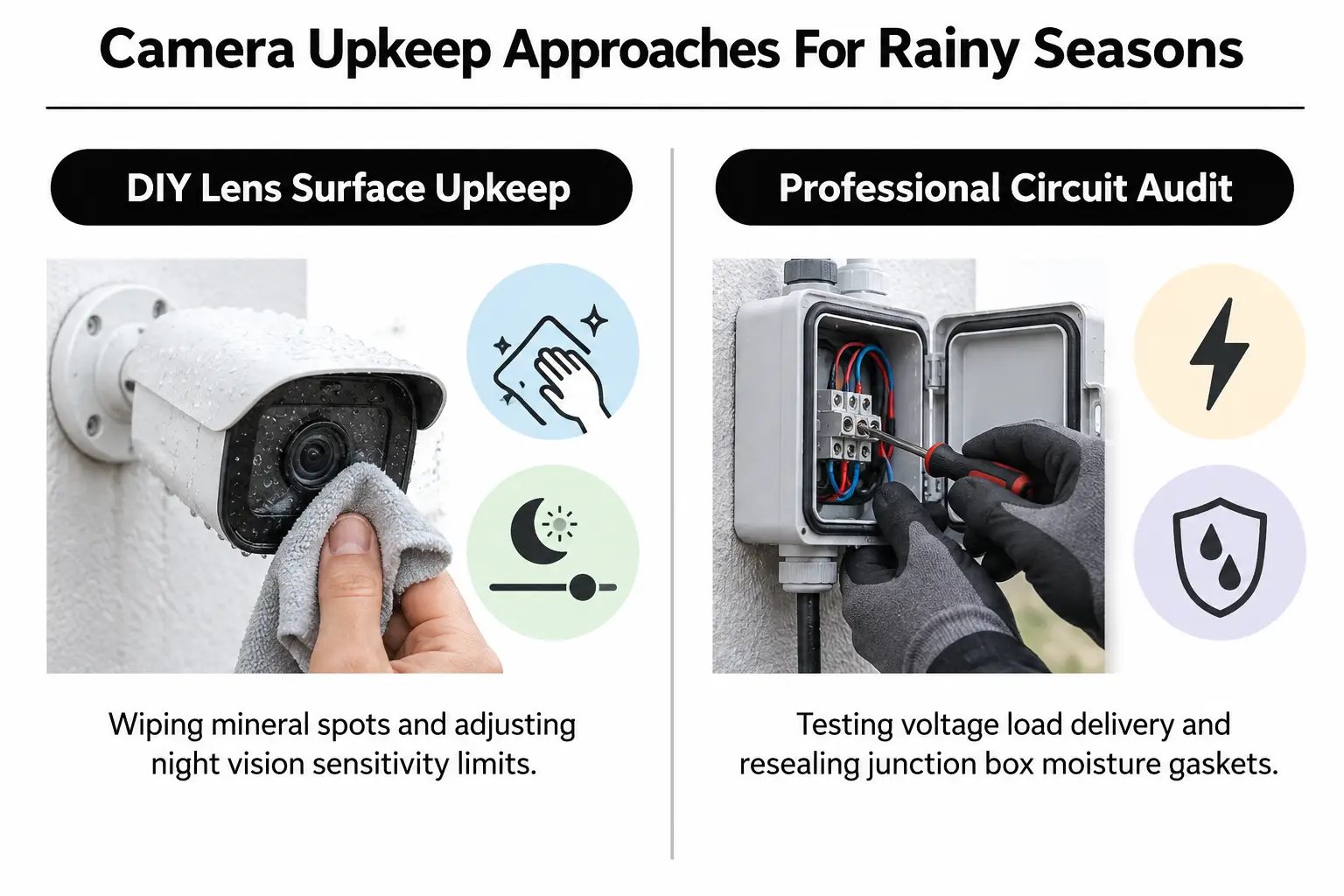
Clear footage takes both clean glass and the right app settings. We recommend checking the physical equipment alongside the software rather than assuming a blurry feed needs a new camera. Both checks belong in your regular weather preparation.
| Upkeep task | Frequency | DIY or professional | What it does |
|---|---|---|---|
| Water-repellent coating & lens wipe | Monthly during rainy season | DIY | Prevents droplets from bending light and leaving dried sediment spots. |
| Detection zone adjustments | Twice yearly | DIY | Stops repeated false triggers from reflections on wet asphalt. |
| Silicone gasket & cable seal check | Annually in autumn | DIY | Stops condensation inside the housing before winter freezes arrive. |
| Transformer & voltage supply check | Every two years | Licensed pro ($$) | Checks for steady voltage when infrared lights draw more power at night. |
| Junction box moisture & corrosion removal | Every two years | Licensed pro ($$) | Prevents sudden signal loss and damage to internal wires. |
Knowing which checks you can handle helps avoid replacing parts that still work. For a broader project budget, our guide to device installation costs in Sterling breaks down the trade costs you can expect.
Hands-On Adjustments You Can Handle Right Now
Several app changes can improve bad-weather visibility without touching any wiring. Work through these settings before the next heavy storm crosses the county, then give the outer glass some attention too:
Video from TECHLOGICS on how rain, fog and snow affect CCTV footage.
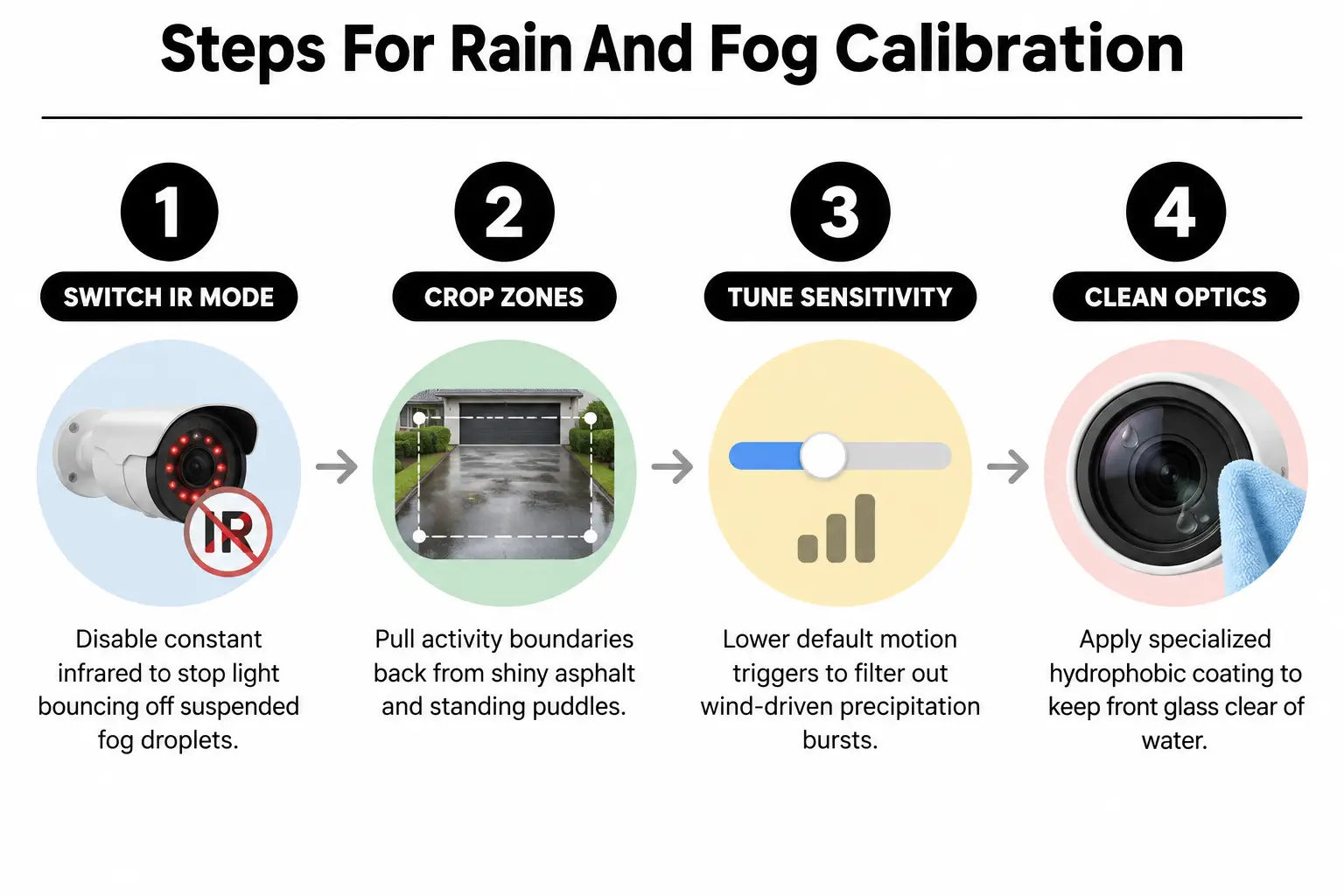
- Turn off continuous infrared lighting: During dense fog, change Night Vision from "Always On" to "Auto." With enough pathway lighting, turn infrared off entirely to avoid glare from light reflected back into the camera.
- Narrow active detection zones: Keep boundaries tight around important walkways and exclude shiny driveway edges. According to official standards, rain-soaked reflections can resemble human shapes.
- Lower general motion sensitivity: Move sensitivity down one notch. This gives recognized objects, such as people, animals or vehicles, priority over falling rain droplets.
- Apply optical rain repellent: Wipe the outer glass with a dry microfiber cloth. Follow with a tiny drop of ceramic water repellent made for security plastics so water runs off.
Cameras facing a neighbor's property or a busy footpath need attention to privacy as well. Read our guide to setting up privacy zones so your changes stay within local residential boundaries.
What Happens During a Professional Electrical Hardware Inspection
No software setting can fix a weak power supply. Outdoor cameras draw the most power when internal heaters and infrared light rings run together on cold, damp nights. Falling voltage in the supply wiring causes silent resets just when the weather is worst.
During an inspection, a technician uses a digital multimeter to measure voltage at each camera while it draws power. Gaskets are also checked against electrical code requirements for wet outdoor locations. Damaged wiring behind brick or stucco needs a verified Google Nest specialist who can test the cable runs safely rather than abandon them.
Voltage drop rule: Outdoor low-voltage camera lines longer than seventy-five feet must use eighteen-gauge twisted copper or heavier wire to prevent reboots during storms.
Historic homes and older utility panels can make these checks more involved. At NovaProHome, our engineer-led team helps owners check that exterior circuits throughout the home can handle seasonal dampness without tripping breakers.
Managing Virginia Climate Shifts Quarter by Quarter
Virginia weather calls for different checks throughout the year. Preparing before each season changes helps keep coverage steady as weather and air pressure shift.
Spring Thaw & Heavy Showers
- Remove yellow tree pollen from front lens covers before heavy rain leaves a baked-on layer of residue.
- Trim fast-growing bush shoots out of the camera's view so windblown leaves do not set off false alarms.
- Inspect drip loops, the downward bends in exposed wires, to make sure water runs away from wall entry holes.
Summer Humidity & Thunderstorms
- Look inside lens housings for trapped moisture droplets after strong afternoon storms pass through.
- Test the main router's signal, since high humidity and thick tree cover weaken wireless camera transmission speeds.
- Clear spider webs weekly because their threads reflect infrared light and glow in damp night air.
Autumn River Mist & Falling Leaves
- Adjust detection boundaries as trees lose leaves and expose background roads that interfere with motion detection.
- Change night lighting settings to account for morning fog drifting up from low creek beds.
- Keep gutter downspout splash areas clear where they sit close to low-mounted doorbell cameras.
Winter Freezes & Icy Drizzle
- Gently scrape ice from mounting brackets without knocking the camera lens out of alignment.
- Confirm battery-powered cameras have enough charge to run their internal warmers on nights below freezing.
- Make sure exterior floodlight bulbs light foggy driveways properly without washing out the camera image.
The True Cost of Neglecting Moisture Management
Foggy clips are only the visible part of a water problem. Inside plastic camera housings, moisture leaves tiny mineral bridges across circuit boards. Those bridges cause small short circuits that destroy sensitive image processors long before the warranty expires.
Corroded camera leads also send resistance back into connected chime transformers and indoor network switches. A cheap preventive gasket replacement can become a much larger repair. Neglected moisture means replacing whole cameras and pulling new low-voltage lines through finished crawlspaces, with unexplained network drops to track down inside the home.
Installation choices help prevent early hardware failure in the area's varied local climates. We explain those choices in our guide to getting installation right in Ashburn. For mistakes to watch for elsewhere nearby, see our advice on avoiding installation errors in Arcola.
Common Questions on Wet Climate Security Cameras
nest camera installer
Licensed Nest installers use weatherproof drip loops and seal wall openings against rain. They also adjust video settings in the app for local weather. Professional installation guarantees the right power supply without putting your home's exterior at risk of water damage.
doorbell installation
Before mounting a doorbell, the installer checks transformer output and seals the wire entries against weather. The faceplate needs an angle that keeps driving rain from flooding the front microphone port. Correct positioning also keeps water spots from distorting recordings of visitors at your door.
security system installation
Outdoor cameras work with motion sensors and smart hubs as one network in a complete security installation. Its settings must account for local weather. Getting that setup right reduces false alarms during storms while keeping the home's main entry points protected.
ring doorbell installation near me
Local Ring installers match the mounting wedge to your porch roof angle. That keeps rainwater from collecting across the wide-angle camera dome. Our guide to doorbell, camera and alarm installation explains the options we offer for homes in the area.
ring doorbell installers near me
Experienced installers quickly spot weak existing doorbell wiring. Underpowered transformers get replaced with heavy-duty units that will not fail during freezing rain. That electrical experience also prevents unexplained chime buzzing when humid weather arrives.
security camera installation near me
Certified technicians assess roof lines and tree cover before choosing camera positions. Hardware goes where runoff will not blind the lens in a downpour. Licensed professionals also bring specialized ladders and masonry drills to install weather-tight conduit, the protective tubing around wiring, safely.
smart security camera installation virginia
Installing smart security cameras in Virginia takes knowledge of local humidity and seasonal temperature swings. Local building authorities also set strict moisture-barrier codes that the work must meet. Carefully planned wire routes keep windblown moisture from getting into attic spaces.
Book Your Next Diagnostic Visit in Town
Heavy moisture tests app settings as well as electrical connections. At NovaProHome, we bring over ten years of operational leadership and a deep electrical engineering background to the work we do in your home.
Our team supplies and installs complete Google Nest systems in a single visit, including wiring and app setup. You do not need to coordinate several contractors. Every project comes with a fixed written quote and proper county permits, backed by two million dollars in active insurance coverage.
For fogged recordings, drained batteries or repeated false alerts, request a quote for an on-site evaluation with our technicians in Leesburg, Virginia.
Frequently Asked Questions
nest camera installer
Weatherproof drip loops and sealed wall openings protect outdoor units from rain during a licensed installation. The installer also adjusts video streams through the app to suit local weather conditions.
doorbell installation
Transformer output needs checking before a doorbell goes up, and wire entries need weatherproofing. Angling the faceplate correctly keeps driving rain from flooding the front microphone port.
security system installation
Putting outdoor cameras on a shared network with motion sensors and smart hubs lets them work together. A complete installation includes settings that account for local environmental conditions.
ring doorbell installation near me
Porch roof angles determine which mounting wedge a local professional uses for a Ring doorbell. Matching the wedge to the porch keeps rainwater from pooling across the wide-angle camera dome.
ring doorbell installers near me
Weak doorbell wiring is something experienced Ring installers can spot quickly. They replace underpowered transformers with heavy-duty units that will not fail when freezing rain hits.
security camera installation near me
Roof lines and tree cover shape where certified technicians place outdoor security cameras. Assessing both before mounting the hardware keeps runoff from blinding lenses during heavy downpours.
smart security camera installation virginia
Regional humidity patterns and seasonal temperature changes affect smart camera installation across Virginia. Installers must also understand the strict moisture-barrier codes set by local building authorities.
Ready to engineer your smart home?
Start with a free 20-minute discovery call. No pressure, no sales script — just a plan.